

If someone never visited your website, would they still get an accurate picture of your business?
Imagine someone recommends your business to a potential customer.
They search your name, check your Google Business Profile and read a few reviews. An industry directory lists a service you stopped offering two years ago, and your LinkedIn page still describes the smaller jobs you used to take on.
You’ve already updated your website to reflect the business you run today. But the customer never gets that far. They’ve seen enough to decide you’re probably the wrong fit.
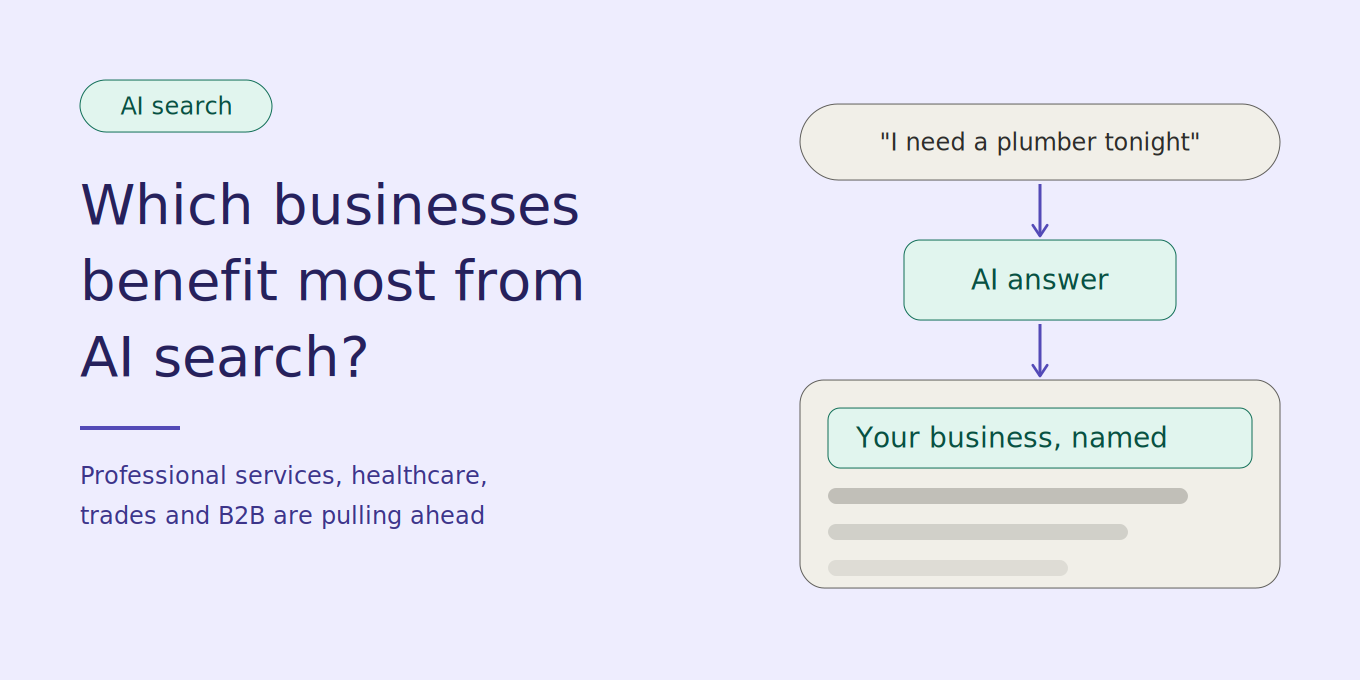
Now imagine a different customer who has never heard of you. They search for a specific service in their area or ask an AI search tool to help them find a suitable provider. This time, a clear service page on your website can help them discover you in the first place. Your public profiles, reviews and other listings then give them more information to decide whether to get in touch.
That’s why an AI-ready website and accurate information elsewhere matter together. One helps people discover what you do. The other helps them see whether it’s a good fit for what they need.
What can customers learn before they reach your website?
A customer checking a referral has a different question from someone searching for a service. The first wants to know whether you’re the business they were told about and whether you’re worth calling. The second wants to know who can solve their problem.
Both can make progress without visiting your homepage. A Google Business Profile can tell them what kind of business you are and where you operate. A review can describe a job that sounds like theirs. A supplier’s partner directory can show that you work with a system they already use. A LinkedIn post can show the sort of work your team is doing now.
Google says it sources Business Profile information from several places, including public web content, licensed data and contributions from business owners and users. Even a profile you manage can draw on information beyond what you entered yourself. Google Business Profile Help
The question for owners is whether those sources describe the business you want customers to find today. Your phone number might be correct everywhere, while three of your most visible listings still give people the wrong idea about the work you do.
Our B2B Media Hub covers how changes in search and AI discovery affect the way customers find businesses.
Where can a business owner publish accurate information?
Your website usually gives you the most control and the most room to explain your work. You can show how a service works, who it suits and what you’ve delivered. You can also publish accurate information through other channels. The practical difference is who can update each source and what it can tell a customer.
Where people find youWhat you can do as the ownerWhat it can tell a customerYour websitePublish detailed service pages, case studies, service areas and contact information.Whether you can handle their particular job and what working with you involves.Google Business Profile and LinkedInKeep your business description, services and relevant details current on the profiles you manage.What you do now and how to take the next step.Industry directories and partner listingsUpdate listings you manage or ask the publisher to correct outdated information.Which industries, qualifications or supplier relationships are relevant to their enquiry.Customer reviewsInvite customers to share an honest account of their experience and respond where helpful.What working with you was like from the customer’s point of view.Media coverage and older mentionsRequest a correction for factual errors and give the publisher a current source to reference.How your business has been described over time.
The wording can suit each platform. A Google profile might summarise a service in a line. A page on your website can explain what’s included and show a completed project. The facts that affect a buying decision should agree, especially what you do, who you help and where you operate.
If you’ve dropped a service, start with the places people are most likely to see. Correct your own pages and profiles, then contact the publisher of any prominent listing that still sends you the wrong enquiries.
How does an AI-ready website help people find you?
Picture a commercial electrician in Brisbane. The company’s public profile identifies it as an electrician. Its homepage says it provides electrical services across Brisbane. Both are accurate, but a facilities manager searching for “after-hours electrical maintenance for a Brisbane warehouse” needs more detail.
If the company offers that work, a dedicated service page can explain:
- The types of commercial sites it services.
- Which parts of Brisbane it covers.
- What planned maintenance includes.
- Whether after-hours work is available and under what arrangements.
- A relevant project and the information the team needs to assess a new enquiry.
That page gives a search engine more specific information to assess against the query. It also helps a prospective customer see whether to call, what to ask and what to have ready. A directory entry or a relevant customer review can add useful context, while the service page gives the business room to explain exactly what it offers.
Being AI-ready starts with making important information easy to find and understand. Use descriptive page titles and headings. Put essential information in readable text. Link to priority services from relevant pages and make sure search engines can access them. If you use structured data, check that it matches what visitors can see on the page.
Google says the same SEO fundamentals apply to its AI search features. For a page to be eligible as a supporting link in AI Overviews or AI Mode, it needs to be indexed and eligible to appear in Google Search with a snippet. Meeting those requirements makes inclusion possible. Google decides which sources to show for each search. Google Search Central guidance on AI features. developers.google.com
If you want to see how AI-generated answers fit into Google’s results, read our guide to AI Overviews and Australian businesses.
How do AI-Readable and AI-Trusted work together?
We use the first two stages of the B2B AI Visibility Ladder to ask two practical questions.
AI-Readable. Can search tools find and understand your important pages? Start with the service you most want to grow. Can someone quickly tell what it is, who it’s for and where it’s available? Is it easy to find from your main navigation or related content? Does the page actually answer the question a customer is likely to search?
AI-Trusted. What evidence supports what you say? A completed project can demonstrate relevant experience. A current industry listing can confirm a membership. A detailed customer review can explain what you were like to deal with on a job. Each source contributes something different.
A good test is to take one claim from your homepage and ask what a customer could check. If you say you specialise in commercial maintenance, can they find a page that explains the work, an example of a completed project and current public profiles that describe the same service? That gives them something concrete to assess. Explore the stages of AI readiness.
Once people find the right page, consider what happens to their enquiry. Our article on getting your website ready to work harder looks at what happens after an enquiry comes in.
A 15-minute check you can do today
Minutes 1–5 — Search for your business by name
Open the first five relevant results. Before opening your own website, ask whether someone could work out what you do, where you work and whether you suit their needs.
Look for an outdated service, wrong phone number, old trading name or description that no longer reflects the customers you serve. If your business has changed names, check both names.
Minutes 6–10 — Search for a service as a customer would
Pick a service you want more enquiries for and search for it with a relevant location. Try a specific phrase such as “commercial electrical maintenance Brisbane” or “short-run product labels Brisbane”. If your customers use AI search, try phrasing the same request as a question.
See which pages and listings appear, what details they provide and which sources an AI answer cites, if it shows any. Treat what you find as a snapshot. Google says local results depend in part on distance and relevance, and the sources displayed across its AI search features can vary. Google’s guidance on local ranking. Google Business Profile Help
Minutes 11–15 — Choose one correction
Compare what you found with the relevant page on your website. Pick the change most likely to help the right customer understand your business.
If several people could call about a service you no longer offer, fix the prominent listing. If your highest-priority service only appears in a bullet on your homepage, flesh out the service page and link to it. If a partner listing uses your old trading name, ask the partner to update it and give them the current page to link to.
Write down the change and the date. When you revisit it, look at enquiry quality as well as visibility. Are more people asking about the work you actually want? Are fewer people calling about services you’ve dropped? Those are outcomes your team can observe.
Frequently asked questions
Is my website the main source of information about my business?
It’s usually the most complete source you control. The first source a customer sees may be a Google profile, a review, a directory listing or an AI-generated answer.
Will an AI-ready website help my business show up in search?
It can help search engines find your pages and understand when they’re relevant. Start by making your priority services easy to access, describe them in detail and use language your customers would recognise. Visibility depends on the search and the sources selected. developers.google.com
Is Google Business Profile enough?
It covers important details for local discovery, such as your category, location and operating hours. A website gives you more room to explain specialist services, answer common questions and show examples of your work.
Do I need the same description on every platform?
Adapt the length and wording to the platform. Keep the facts aligned, including your business name, core services, contact information and any service-area details that affect a customer’s decision.
What if an AI search tool gets something wrong about my business?
Check any sources it cites. Update inaccurate information on the pages and profiles you manage, and request a correction where a third party controls the source. If the answer gives no sources, search for the incorrect detail and see whether it appears in a public listing.
Do I need a new website to improve AI readiness?
Start by checking the website you have. If you can publish useful pages, link to them clearly and make them accessible to search engines, you may be able to improve priority services on your existing site.
What should I fix first if my business has changed names?
Update your website and the public profiles customers are most likely to see. Check prominent directories and partner listings for the old name. Where the name change could confuse customers, explain it in plain language. For example, B2B Websites is becoming B2B Digital. We’re the same team providing the same services.
How can I tell whether the changes helped?
Record the pages and listings you changed and watch what happens over time. Track search visibility for those services and ask customers how they found you. Compare the enquiries you receive with the type of work you were trying to attract.
Make it easier for the right customers to find you
Start with one service you want to grow. Give it a clear home on your website, explain who it’s for and add a real example of the work. Then check whether the places customers find you elsewhere describe that service accurately.
Want to see how clearly your website and public profiles explain what you do? Start with B2B Digital’s free AI website readiness audit.












Versatility Across All Platforms


How can i help you today?


