

The Great Website Bypass
Why AI May Never Send Visitors to Your Website Again
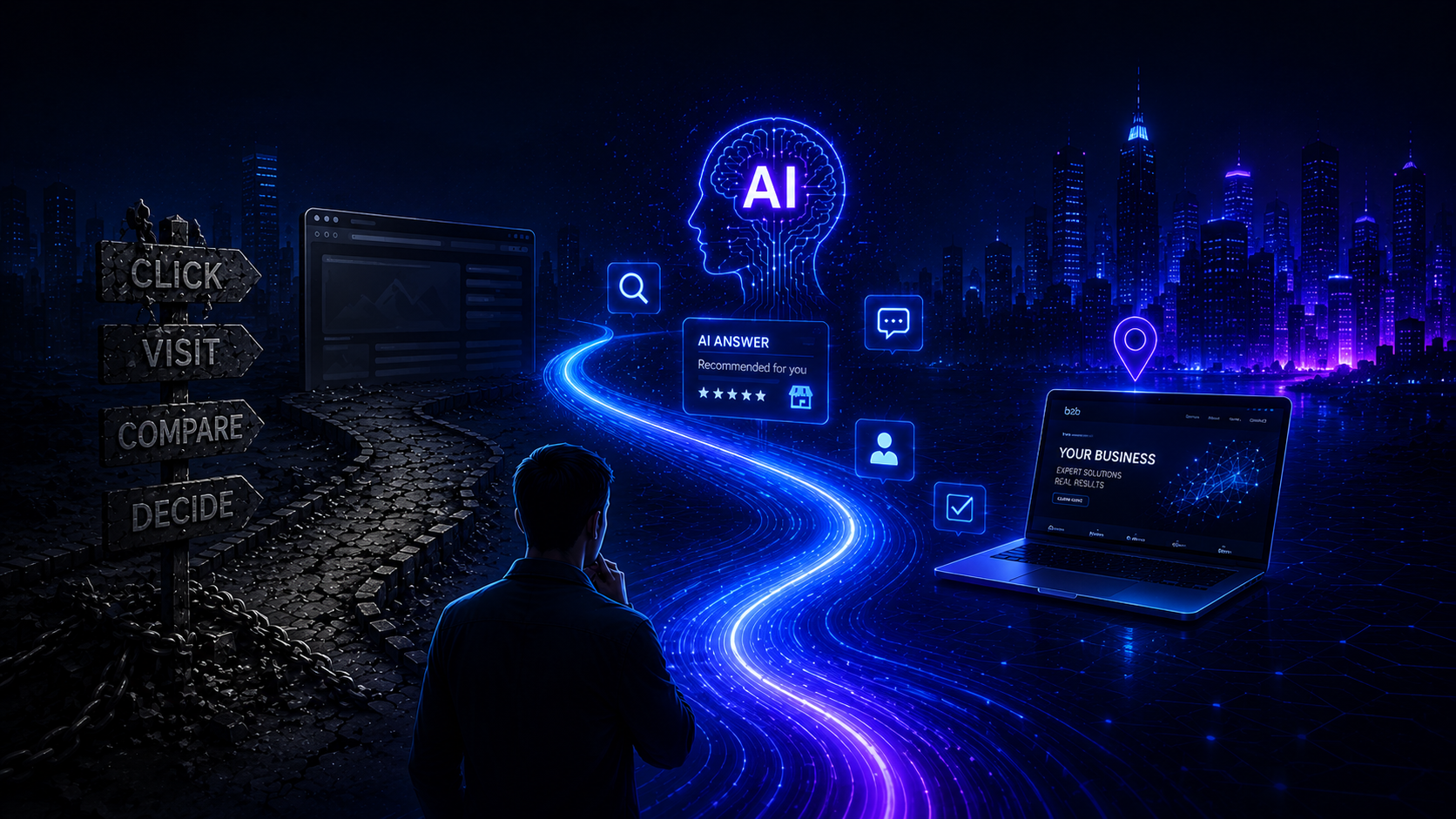
Right now, thousands of Australians are asking ChatGPT for recommendations instead of searching Google. Many of those conversations never result in a website visit. There is no clicking through, no comparing tabs, just an answer. This shift is being called "The Great Website Bypass," and it's already changing how businesses get chosen.
So what does this actually mean for your business? It means the old rule of more traffic equals more customers no longer holds the way it used to. AI tools are becoming the first stop for a huge number of questions, and sometimes the only stop.
Gartner, a leading global technology research and advisory firm, forecasts that traditional search engine volume will drop 25 percent by 2026 as generative AI tools replace queries that used to run through Google.
Separate data from SparkToro, an audience intelligence platform, and Similarweb, a leading digital traffic analytics company, found that 68% of Google searches in early 2026 ended without a single click.
And when Google's AI Overviews appear on a search, studies from Ahrefs and Seer Interactive show organic click-through rates falling somewhere between 58 and 61 percent. Put simply, fewer people are clicking through to websites at all, and the businesses that adapt to that reality now will be the ones still getting found later.
How Is the Customer Journey Changing With AI Search?
The customer journey has genuinely flipped. A person used to compare several sites before deciding who to call. Increasingly, users act on AI recommendations without comparing multiple websites. That single change affects how trust gets built, how leads reach your door, and how much control a business actually has over its own first impression.

Traditional Search: The Ten Blue Links Era
For decades, the path was simple: question, then Google, then several websites, then a decision. A person would search, click into three or four results, compare pricing, photos, and reviews, and slowly form an opinion. Winning meant winning the click first, then winning the visitor once they landed on your page. It was a long process, and one where a business could lose someone simply because a competitor's site loaded faster or looked more polished on the day.
AI Search: From Question to Recommendation
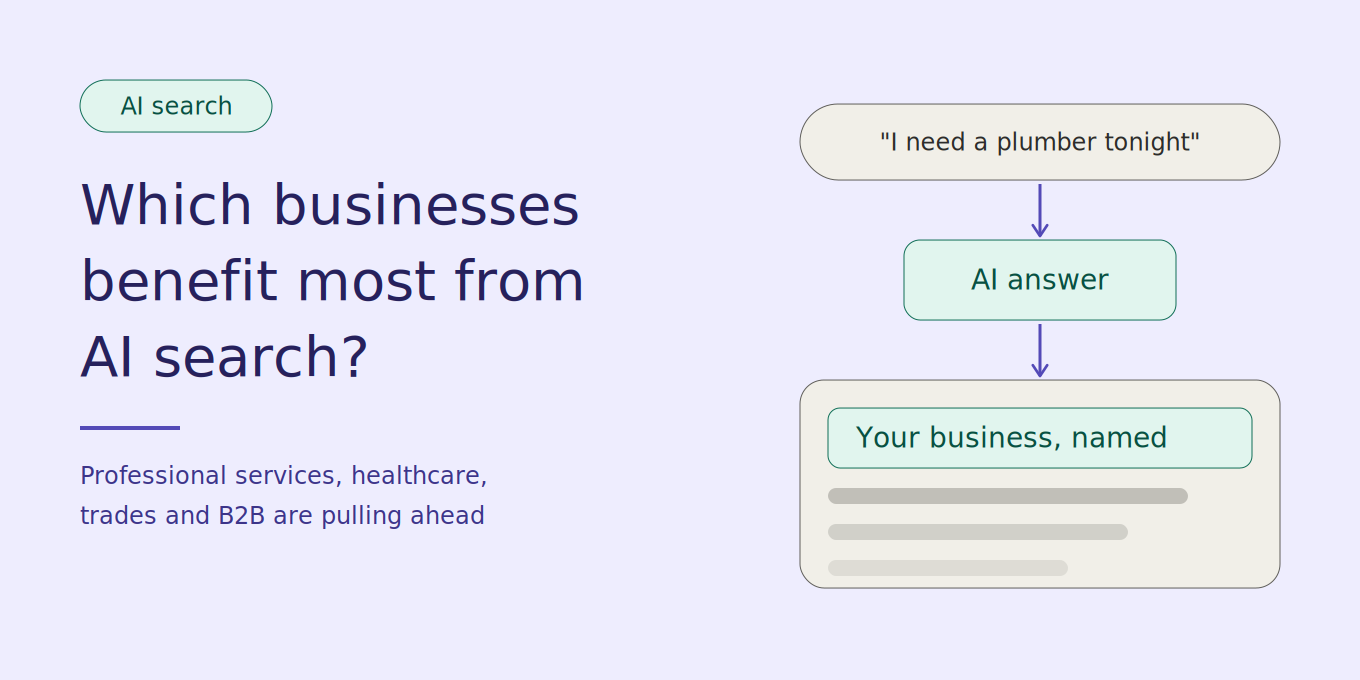
The new path looks like this: question, AI answer, recommended business, and then a phone call or enquiry. The AI has already done the comparison on the person's behalf. It reads through many sources, weighs which ones seem trustworthy, and delivers a short answer, often naming just one or two businesses. By the time the user reaches out, they've usually already decided you're the right fit before they've even opened your website.
Do People Still Compare Several Websites Before Deciding?
Not the way they used to. Many people now trust the AI's summary enough to skip that manual comparison stage entirely. That doesn't mean due diligence is gone. It has just moved earlier. It now happens inside the AI's reasoning process, using whatever information it can find about your business, well before the user ever types your name into a browser themselves.
What Does This New AI Search Journey Actually Look Like Step by Step?
- A person asks the AI a specific, natural question instead of typing a string of keywords.
- The AI reads through multiple sources, including your website, directories, and reviews.
- It checks details like your services, location, pricing signals, and overall reputation.
- It gives a direct answer, often naming one or two businesses.
- The person contacts that business straight away, skipping the old comparison-shopping stage.
Want a deeper look into this technical shift? Because the entire mechanism behind how information is indexed has evolved, we mapped out a comprehensive breakdown on navigating the changing landscape of website discovery and how bots are acting as the new internet gatekeepers.
People Also Ask
- Does this mean SEO doesn't matter anymore? Not at all. It means SEO is expanding into something bigger, covering how AI tools understand and trust your content, not only how you rank on a results page.
- Will people stop visiting business websites completely? No, but fewer first impressions will happen there. A growing share of decisions are being made inside an AI answer before anyone clicks through.
- Example: A customer only clicks through to your website because an AI deeply analysed their specific needs and recommended you as the absolute perfect fit for what they are looking for.
Why Is Your Website Now a Knowledge Source, Not Just a Destination?
Your website's audience has quietly grown. It's no longer just people scrolling on their phones. It's also AI systems reading, extracting facts, and deciding whether your business deserves a recommendation.
That means how your content is written and structured now matters just as much as how it looks. A beautifully designed site that's vague about what you actually do won't get picked up the way a clear, specific one will, no matter how good it looks to a human visitor.
From Storefront to Structured Data
A website built only to look good for human visitors is only doing half its job now. The other half is being easy for an AI model to read, understand, and trust. That means clear explanations of what you offer, written in plain language, without vague marketing phrases that sound nice on a page but say very little once a machine tries to extract meaning from them.
How Does AI Actually Read and Judge Your Content?
AI models don't browse the way people do. They pull out facts and check them against everything else being said about your business elsewhere online. Consistency matters a great deal here. If your address, your services, or your claims are worded differently across your site, your directory listings, and your reviews, that mismatch quietly chips away at how much the AI trusts you enough to recommend you.
Clarity Is What Makes a Website Easy for AI to Understand
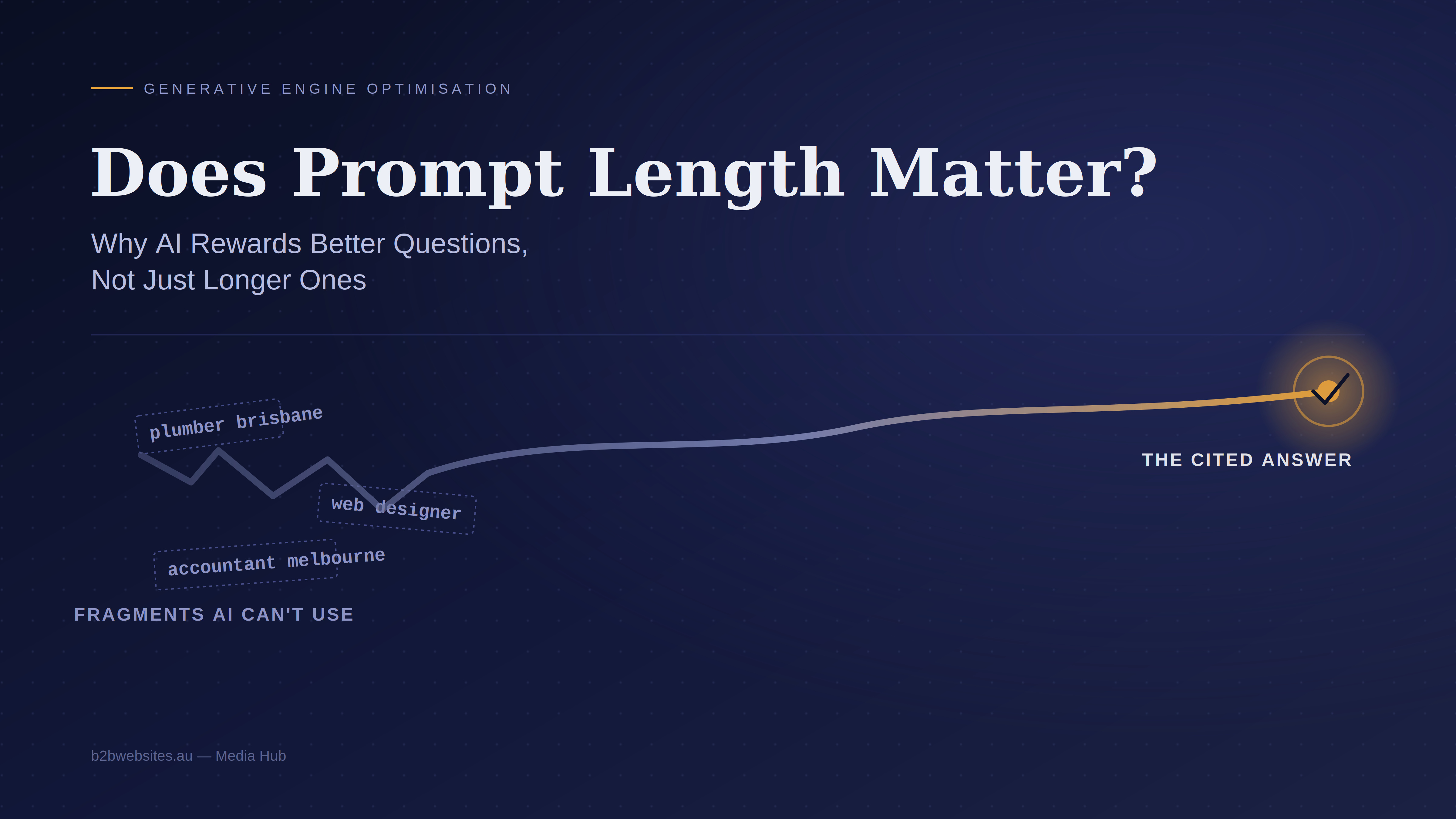
This mostly comes down to clarity. Clear headings, straightforward service descriptions, and content that directly answers real customer questions all help an AI system pull out accurate information quickly, instead of guessing at meaning buried under clever wording. Sites organised around genuine questions tend to get cited more often than sites organised purely around keywords.
What Signals Are AI Models Actually Looking For When Judging a Business?
- Explicit Clarity: Clear, specific descriptions of what you offer, instead of vague marketing language.
- Digital Symmetry: Consistent information across your website, directories, and other platforms.
- Verified Authority: Proof of credibility, like reviews, case studies, or documented experience.
- Intent Matching: Content that directly answers the kinds of questions your real customers ask.
- Data Freshness: Up-to-date, accurate details, since outdated information quietly damages trust.
- Clean Architecture: A site structure that's easy for AI tools to crawl and interpret properly.
If you are looking for a deeper understanding of how these different signals stack up on your own site, we recently mapped out how to analyze your website's true AI readiness and whether your current setup is operating at the right level to be found.
People Also Ask
- What does AI optimisation for websites actually mean? It means writing and structuring your site so AI tools can accurately understand, verify, and recommend your business, alongside the usual SEO work.
- Do I still need a well-designed website if AI is doing the reading? Yes, definitely. Human visitors still arrive, especially once AI has recommended you, and design still shapes whether they trust you and convert once they land.
- Example: AI might recommend your business for "best accountant in Brisbane," but a slow website with a messy user experience will still cause the client to leave.
What Are the New Metrics of Success in an AI-Driven Search World?
The way you measure success needs to catch up with the way people are actually finding you now. A drop in traffic numbers used to be a red flag on its own. Today, it might simply mean AI is doing the filtering before people ever reach your site, sending through fewer but far more qualified visitors instead. With zero-click search now the norm for a majority of queries, judging performance by raw visits alone tells an increasingly incomplete story.
Traffic Alone No Longer Tells the Whole Story
A business can watch its website traffic quietly decline while its phone calls and enquiries actually go up. That's not a contradiction. It's a sign that AI is doing the discovery and comparison work upstream and only passing through the people who are already convinced you're worth talking to, which tends to produce a smaller but noticeably warmer group of leads.
How Do You Actually Measure AI Trust and Recommendation?
The real benchmark now isn't just visits or bounce rate. It's whether AI tools reliably mention your business when someone asks a relevant question in your industry or area. That kind of trust gets earned through consistency and clarity across everything AI can read about you, not through advertising spend alone, and it tends to build slowly over time.
Yes, a Business Can Lose Traffic and Still Grow
This is becoming one of the clearest lessons of this whole shift. Fewer visits combined with higher quality enquiries can genuinely mean stronger results overall, even while the traffic graph on your analytics dashboard trends downward month over month.
How Should Businesses Actually Track Success Beyond Simple Click Counts?
- Track direct enquiries and phone calls, and ask new leads how they actually found you.
- Check whether your business shows up in AI-generated answers for relevant questions.
- Watch for any consistency issues across your website and other online listings.
- Pay close attention to review volume and tone, since AI weighs these heavily.
- Judge your marketing return by enquiry quality, not just by raw visit numbers.
People Also Ask
- How do I know if AI tools are actually recommending my business? Try asking ChatGPT, Gemini, or Claude the kinds of questions a customer might ask about your industry and area, then see if your business comes up.
- Is a website still worth investing in if AI is sending fewer visitors? Absolutely. Your website is now the proof AI relies on to decide whether you're worth recommending in the first place.
- Example: If your website lacks clear, up-to-date details about your pricing, services, or case studies, the AI won't find enough evidence to trust you, and it will recommend a competitor instead.
Is Your Business Ready for the Great Website Bypass?
This isn't some future trend to prepare for someday. It's already happening, quietly, every time someone asks an AI tool a question instead of typing it into a search bar. The businesses that adapt now, by making their websites clear, consistent, and genuinely useful, will be the ones AI chooses to recommend.
The businesses that understand this shift early will become the trusted sources AI recommends. Those that don't may slowly disappear from the conversation.
If you're wondering whether your website is actually built to be found and recommended by AI or simply built to look nice, that's exactly where we can help. We work with businesses to shape their content and structure so it works for real visitors and for the AI tools now making recommendations on their behalf, from clearer messaging to the technical details behind the scenes. Take the next step with us to ensure your business doesn't get completely bypassed as search continues to change.
And if these forward-looking digital shifts get you thinking, we’ve got a growing library of insights in our Media Hub built to keep you ahead of the curve, instead of catching up later.
Because winning the internet today isn't about who ranks first. It’s about who AI trusts first.
Frequently Asked Questions
What is the Great Website Bypass?
It's the growing trend of people getting full answers from AI tools like ChatGPT and Google AI Overviews without ever clicking through to a website.
Will AI search fully replace Google?
Not completely, but traditional search volume is dropping by 25% this year as users rapidly shift their habits toward conversational AI tools.
How does AI decide which business to recommend?
It weighs things like how clear your content is, how consistent your information is across the web, your reviews, and how directly you answer real customer questions.
Does zero-click search mean my website traffic will drop?
It might. SparkToro and Similarweb found that 68 percent of Google searches recently ended without a click, but a drop in traffic doesn't automatically mean a drop in business.
How much do AI Overviews actually reduce clicks to websites?
Studies from Ahrefs and Seer Interactive put the drop in organic click-through rates at roughly 58 to 61 percent when an AI Overview appears on a search.
Does my website platform affect its visibility in AI search? Any major CMS can be optimised for AI search, but the workflow varies wildly. Some require heavy plugin setups while others handle structured data natively. See how they compare in our technical breakdown of Webflow vs. WordPress vs. Shopify for AI Overviews.
How can a small business start optimising for AI search?
Keep your information consistent everywhere it appears online, write clear and specific content, and build credibility through genuine reviews and well-organised details.
How often should I update my website to stay AI search-ready?
Regularly. Outdated or inconsistent information is one of the fastest ways to lose an AI tool's trust in your business.







%2520-%2520Main%2520Image.jpeg)
Versatility Across All Platforms


How can i help you today?


