

The Changing Landscape of Website Discovery: Adapting for the Rise of AI

Businesses today must evolve their web presence for both humans and AI. Most aren't ready for what that means. Traditional search still dominates, but the shift is already measurable. AI-assisted search tools like ChatGPT, Perplexity, and Google's AI Overviews are changing how people find information online. Instead of clicking through a list of results, users are getting direct answers. Those answers come from websites that AI can clearly understand, trust, and recommend. Websites that lack structure, clarity, or credibility signals are simply not being included. The businesses showing up in those answers are not always the biggest or most established. They are the ones whose websites communicate the right signals.
Introduction: The Changing Landscape of Website Discovery
For decades, the way people found information online was simple: humans searched, humans clicked, and websites competed for human attention. But the digital world is shifting rapidly. Artificial intelligence is transforming how websites are discovered and engaged with, fundamentally altering the pathways that lead users to online content. For business owners and web managers, understanding this shift is essential because the rules of the game are changing, and the stakes for online visibility have never been higher.
There are between 1.3 and 1.8 billion websites on the internet. How do people find your website today? Traditional search methods using keywords, search engine optimisation, paid advertisements, and social media have been the mainstay of website discovery. With the rise of AI, bots are now automating sophisticated web discovery processes. The problem is that most websites are not showing AI systems what they need in order to interpret and surface content effectively, and as a result, they are ignored or relegated.
The landscape is evolving quickly. Many companies are already seeing reductions in visits, clicks, conversions, and revenue because AI systems are not finding or rating websites they do not fully understand on their own terms. With only about 15 percent of search currently initiated through AI-driven interfaces, this phenomenon is set to increase rapidly. What got you here will not get you where you need to go.
As businesses begin asking whether their website is “AI-ready,” the real issue is rarely a simple yes or no. AI evaluates websites in stages, not absolutes. We explore this concept in detail in our article Is AI-Readiness Really One Thing, or Is Your Website Operating at Different Levels?, where the progression from clarity to authority is broken down into distinct stages that determine how AI evaluates a business.
Traditional Website Discovery: Built for People
Historically, websites were designed with one primary audience in mind: people. The aim was to create visually appealing, easy-to-navigate pages that would attract human visitors and encourage them to engage, buy, or enquire. Search engines such as Google and Bing played the role of digital librarians, indexing billions of pages and ranking them based on their relevance to human-typed queries.
This human-centric design meant content was written to be read by people, with navigation menus, images, and calls to action crafted to guide the visitor’s journey. The focus was on user experience, accessibility, and persuasive design, ensuring that when a person landed on a page, they could quickly find what they needed and take the next step, whether reading an article or making a purchase.

The Rise of AI in Web Search: Bots Are the New Gatekeepers
Today, AI is rapidly changing how information is found and filtered online. Increasingly, AI-powered systems are responsible for discovering, indexing, and even summarising content before it reaches a human audience. These systems do not see a website the way people do. Instead, they scan for data, metadata, and structured information, analysing not only what is visible but also what is embedded behind the scenes.
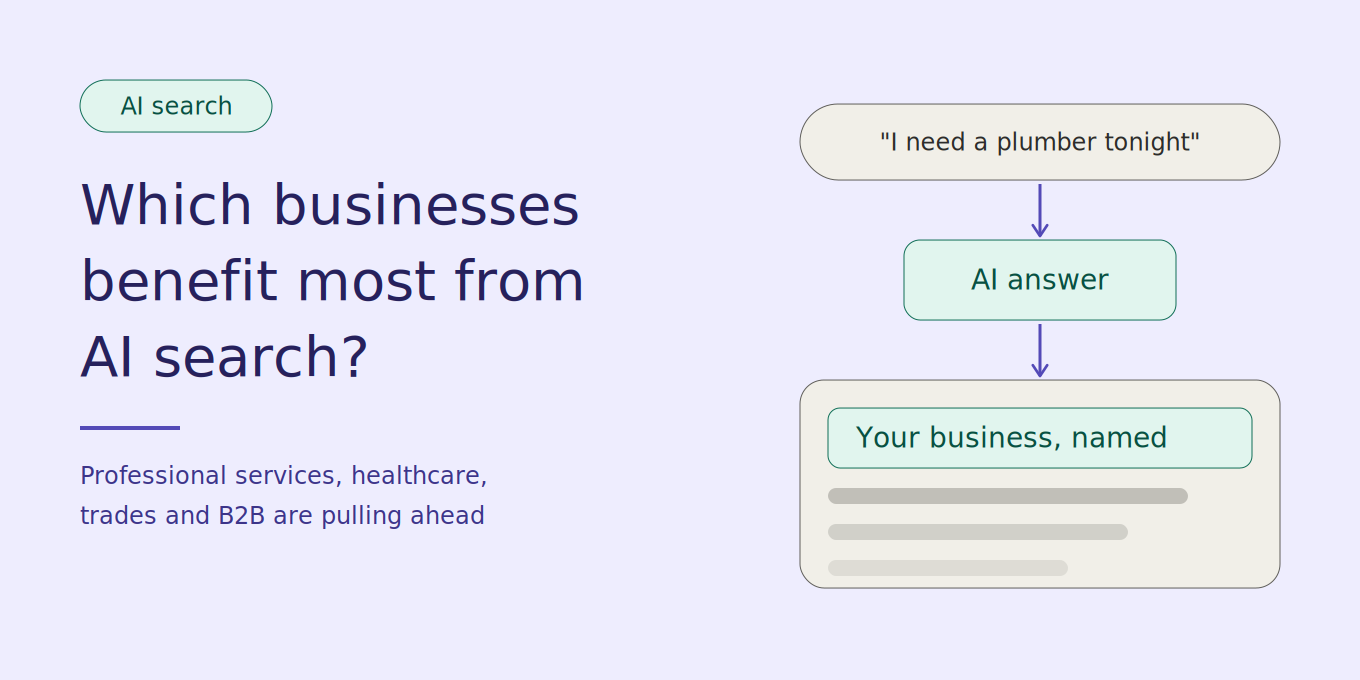
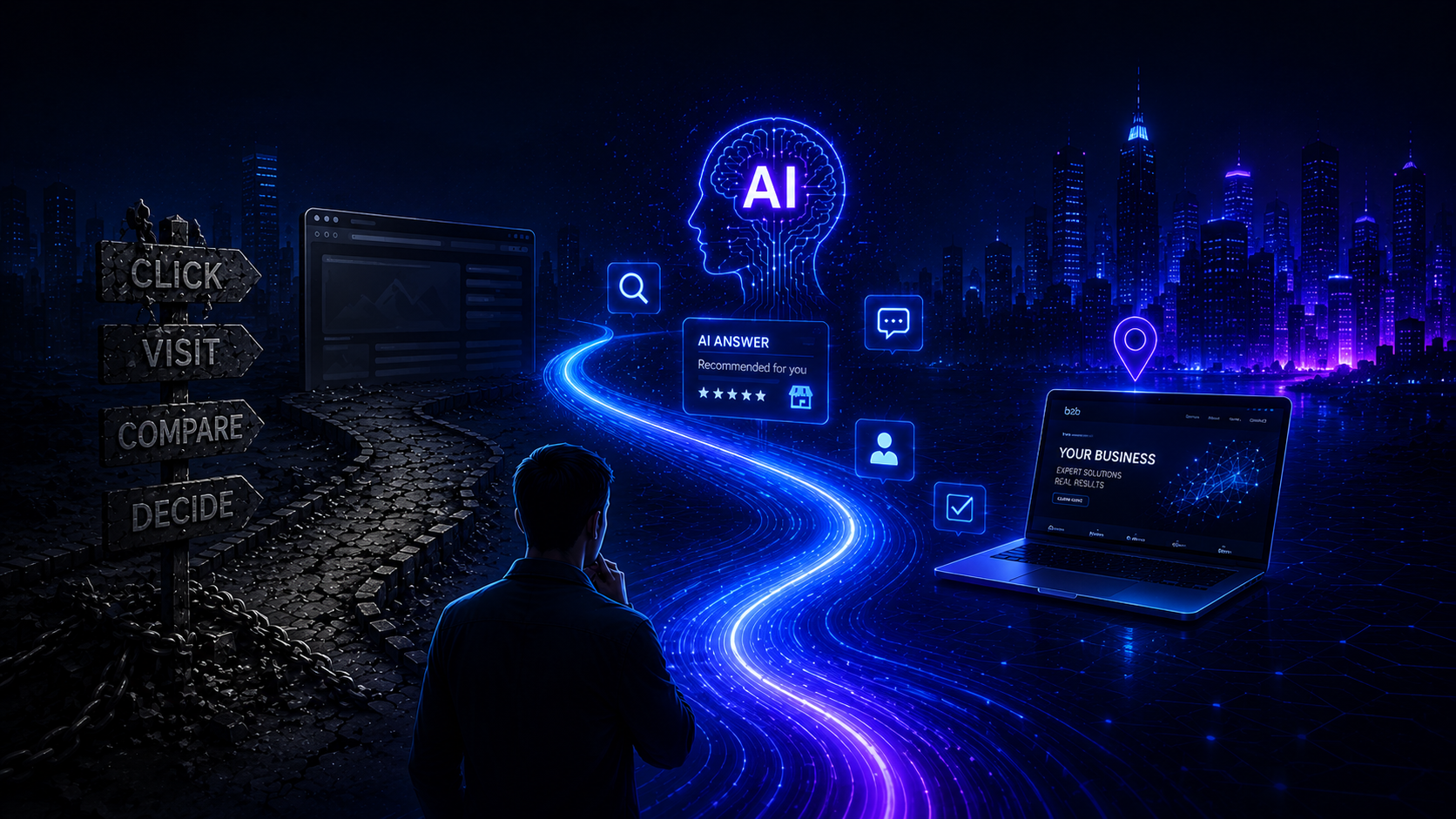
AI is now used to power chatbots, voice assistants, and next-generation search engines that answer questions directly, often without sending a user to the original source website. As a result, the traditional funnel of search, visit, click, convert is being disrupted. AI systems are increasingly acting as intermediaries, deciding what information gets surfaced and what remains hidden.
People also ask
Do AI search tools always send users to websites?
No, many AI search tools provide direct answers within their interface without directing users to the original website.
What role do AI bots play in website visibility?
AI bots analyse and filter website content before it reaches users, influencing which information is surfaced or suppressed.
Impact on Website Metrics: Traffic, Clicks, Conversions, and Revenue
This shift has real consequences for website owners. As AI systems handle more of the search and discovery process, many businesses are seeing declines in traditional metrics: fewer human visitors, reduced clicks, lower conversions, and ultimately a dip in online revenue.
Why? Because AI systems often deliver answers directly within search results or chat interfaces, bypassing the need for a user to visit the actual website. If a business’s content is not optimised for AI discovery, it may not be surfaced at all, or worse, it may be misrepresented or ignored, leading to lost opportunities and reduced brand visibility.
Business Implications: The Need for Adaptation and Action
For organisations that rely on online visibility to drive sales, leads, or brand awareness, this evolution is not just a technical issue. It is a strategic imperative. Businesses must adapt their websites to remain discoverable and relevant in an AI-driven landscape. Failing to do so risks falling behind competitors who are already optimising for both human and AI audiences.
Adapting means more than tweaking keywords or adding a few meta tags. It requires a fundamental rethinking of how web content is structured, described, and made accessible, not only to people but also to the algorithms and systems that increasingly control the flow of information online.
People also ask
Why is AI search a business strategy issue and not just a technical update?
AI search affects visibility, lead generation, and competitive positioning, making it a core business consideration rather than a purely technical adjustment.
What happens if a business does not adapt to AI-driven search?
Businesses that fail to adapt risk declining visibility, reduced traffic, and lost opportunities as AI systems prioritise clearer and better-structured competitors.
How AI Systems Search: The Critical Role of Metadata and Site Structure
AI systems rely heavily on metadata, the behind-the-scenes information that describes the content, structure, and context of a website. This includes page titles, meta descriptions, schema markup, alt text for images, and structured data formats such as JSON-LD or Microdata.
When AI systems crawl a site, they look for this information to understand not just what is on the page, but what it means. Well-structured metadata helps systems accurately categorise content, extract key facts, and answer queries. This is especially important as AI tools are increasingly tasked with summarising content, generating snippets, and providing direct answers in search results.
Before structured data and advanced optimisation matter, AI must first be able to clearly interpret what your business does. We explore this foundational requirement in detail in our article Is Your Business Website AI-Readable?, where clarity is examined as the entry point to AI evaluation.
Common Website Shortcomings: Not Ready for AI
Unfortunately, many current websites fall short in providing the information that AI systems require. Common issues include:
- Missing or poorly written meta titles and descriptions
- No structured data or schema markup
- Unclear site architecture and navigation
- Content locked in images or PDFs and therefore inaccessible to bots
- No alt text for images, making content invisible to non-human readers
- Duplicate or conflicting information across pages
These shortcomings mean that even well-designed, visually appealing sites can be effectively invisible to AI systems. Bots may misinterpret the site’s purpose, skip key pages, or fail to surface the most important information, undermining the site’s effectiveness and reach.
Website Maturity Model: Evolving for Humans and AI
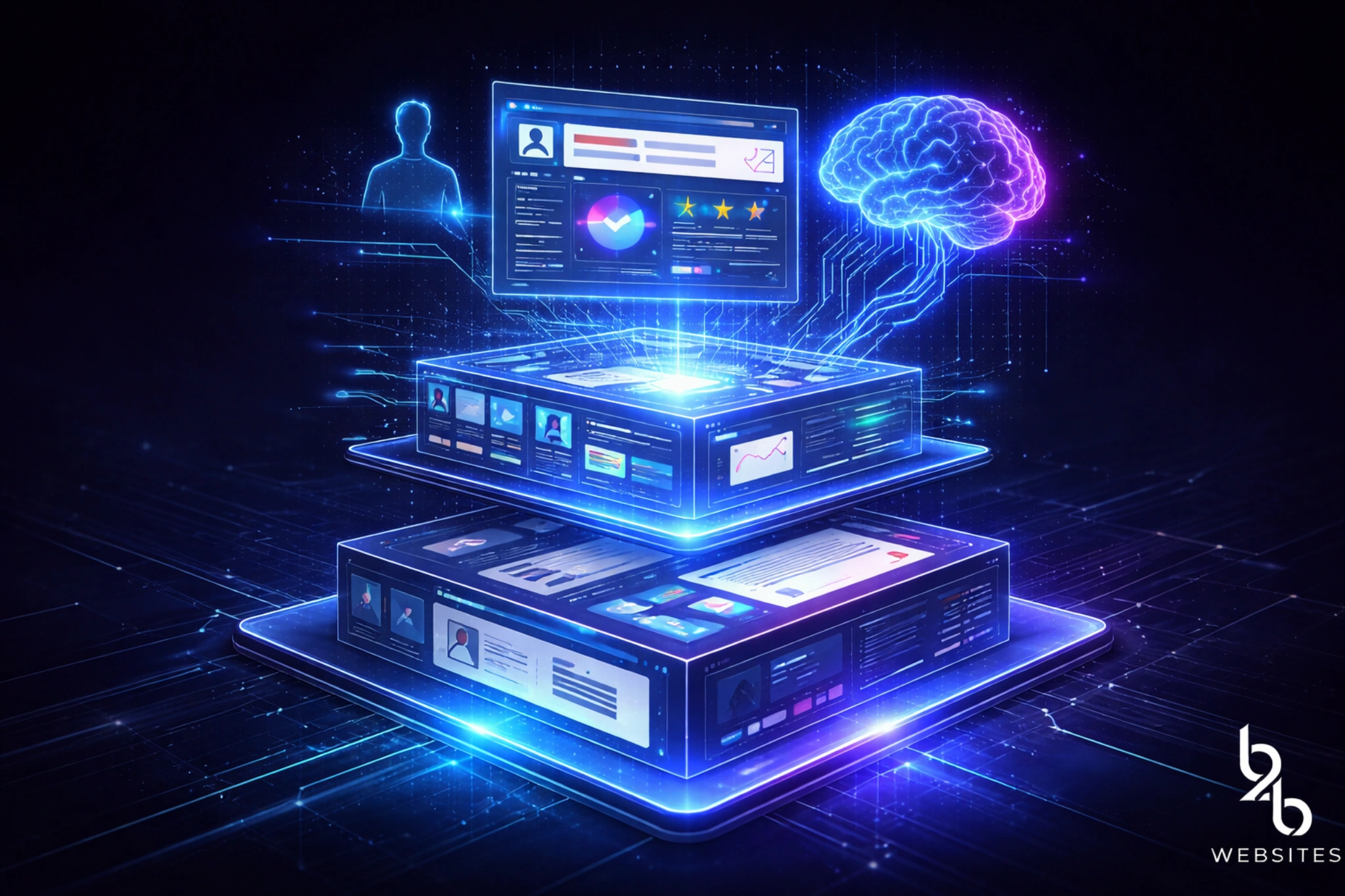
To address these challenges, businesses should view website evolution as a maturity model, a staged approach to making sites usable and valuable for both humans and AI systems.
- Human-Centric Foundation
Start with a site that is visually appealing, easy to navigate, and provides valuable content for human visitors. Prioritise accessibility and mobile responsiveness. - Basic SEO and Metadata
Ensure every page has unique, descriptive meta titles and descriptions. Use clear headings, straightforward URLs, and logical navigation. - Structured Data Implementation
Add schema markup and structured data formats to help AI systems understand the context and meaning of your content. - Content Accessibility
Ensure all important content is accessible as text, not just images or PDFs. Use alt text for images and transcripts for videos. - Continuous Optimisation
Monitor how AI-powered tools and search engines interact with your site. Adjust metadata, structure, and content as standards and best practices evolve.
It is not necessary to completely redesign or recode your website. It can be a relatively straightforward and affordable transition to enhance your current site without changing its fundamental design, usability, or look and feel. By progressing through these stages, businesses can ensure their websites remain visible and relevant, no matter who or what is searching. However, this is not a set-and-forget exercise. Ongoing monitoring, maintenance, and management are required to keep your website asset at the forefront.
Conclusion: Future-Proofing Your Website for Both Audiences
The rise of AI in web search and discovery is reshaping the online landscape. Businesses that want to thrive must recognise that their websites now have two primary audiences: people and AI systems. By understanding how AI evaluates and surfaces information, and by evolving sites through a maturity model, organisations can maintain and even grow their online presence, ensuring their content reaches those who matter most, regardless of how they search.
The future of website discovery is already here. The question is whether your site is ready.
If you want to explore how AI is reshaping visibility, authority, and digital strategy in greater depth, we regularly publish insights on website evolution, AI-readiness, and structured optimisation in our Media Hub. Explore more articles to stay ahead of the shifts redefining how businesses are discovered online.
If you are unsure where your website currently stands in this new AI-driven landscape, or whether your structure, metadata, and content are positioned correctly for modern discovery, our team can help. We work with businesses to assess, refine, and strengthen their websites so they remain visible, credible, and competitive as search continues to evolve.
FAQs
What is AI website discovery?
AI website discovery refers to the process where artificial intelligence systems crawl, interpret, summarise, and surface website content within search engines, chat interfaces, and voice assistants.
Why are some websites losing traffic due to AI?
AI systems increasingly provide direct answers within search results or chat interfaces. If your content is not structured clearly with metadata and structured data, it may not be surfaced at all.
Do I need to redesign my website to become AI-ready?
Not necessarily. In many cases, improving metadata, structured data, content accessibility, and site architecture can significantly improve AI visibility without a full redesign.
What makes a website AI-ready?
An AI-ready website has clear structure, well-implemented metadata, schema markup, accessible content, and consistent information that allows AI systems to interpret its meaning accurately.










%2520-%2520Main%2520Image.jpeg)
Versatility Across All Platforms


How can i help you today?


