

AI-Generated Website Content
How to Build Trust With Google, AI Search and Your Customers
Why publishing more content isn't necessarily better — and what Australian businesses can learn from a real website development project.
Artificial intelligence can produce a website article in seconds. It can generate service descriptions, FAQs, product information and landing pages faster than most businesses could have imagined only a few years ago.
But there's an important question Australian business owners should be asking:
If everyone can produce content with AI, what makes your website worth trusting?
The answer isn't simply publishing more.
It's publishing information that is accurate, useful, specific to your business and supported by genuine experience.
This matters because customers are increasingly using AI-powered tools to investigate products, compare suppliers and identify businesses before making contact.
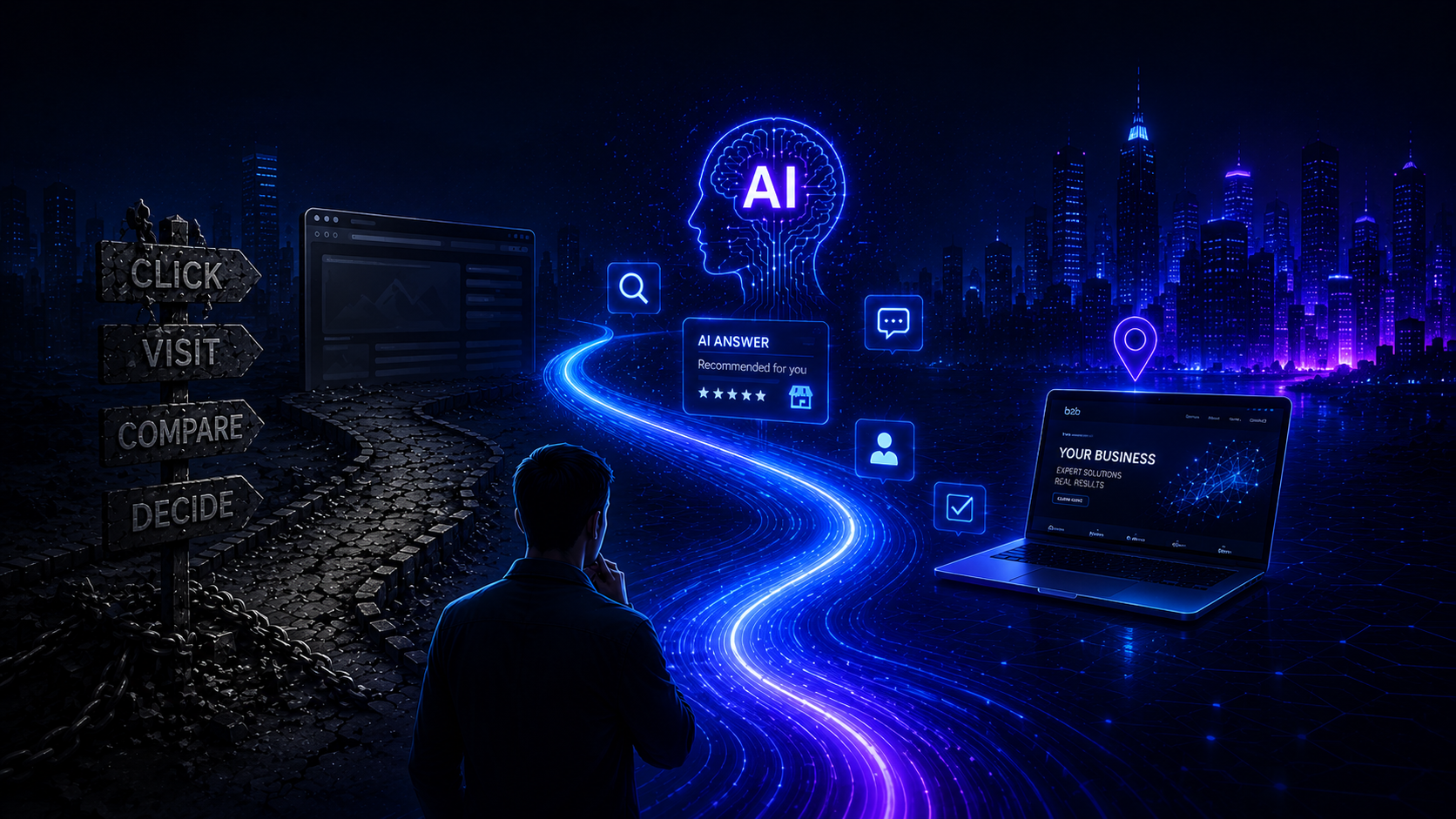
In our earlier article, The Great Website Bypass, we explored how AI-powered discovery can change the traditional journey from search results to websites.
As that journey evolves, businesses need to think beyond how many people visit their website. They also need to consider whether their information is clear, credible and useful enough to inform an AI-generated answer.
Does Google Penalise AI-Generated Website Content?
The short answer is no — not simply because AI was involved.
Google's official guidance explains that generative AI can be useful for research and organising original content.
However, generating large quantities of pages without adding meaningful value may violate its policies against scaled content abuse.
The distinction is between using AI to communicate valuable information and using automation to manufacture large volumes of low-value material.
Google's guidance on generative AI content emphasises accuracy, quality and relevance.
For an Australian business, this means an AI-assisted article can be entirely appropriate when it provides genuine answers to customer questions.
But a hundred nearly identical service pages, filled with interchangeable descriptions and unsupported claims, may provide very little value.
The important question isn't whether AI wrote the content. It's whether the finished content deserves to exist.
Why Generic AI Content Often Fails to Build Trust
Imagine searching for a company to develop a customer portal.
You find a website promising innovative solutions, seamless integration, exceptional service and industry-leading technology.
The language sounds professional.
But what have you actually learned?
Perhaps nothing about the systems the company has built, the integrations it supports, how projects are delivered or what happens when something goes wrong.
This is a common weakness of generic AI-generated content.
It can describe a business in convincing language without demonstrating the knowledge needed to support a purchasing decision.
For B2B buyers, that distinction matters.
A customer investing in a website, business software, manufacturing equipment or professional service wants evidence that the supplier understands the problem.
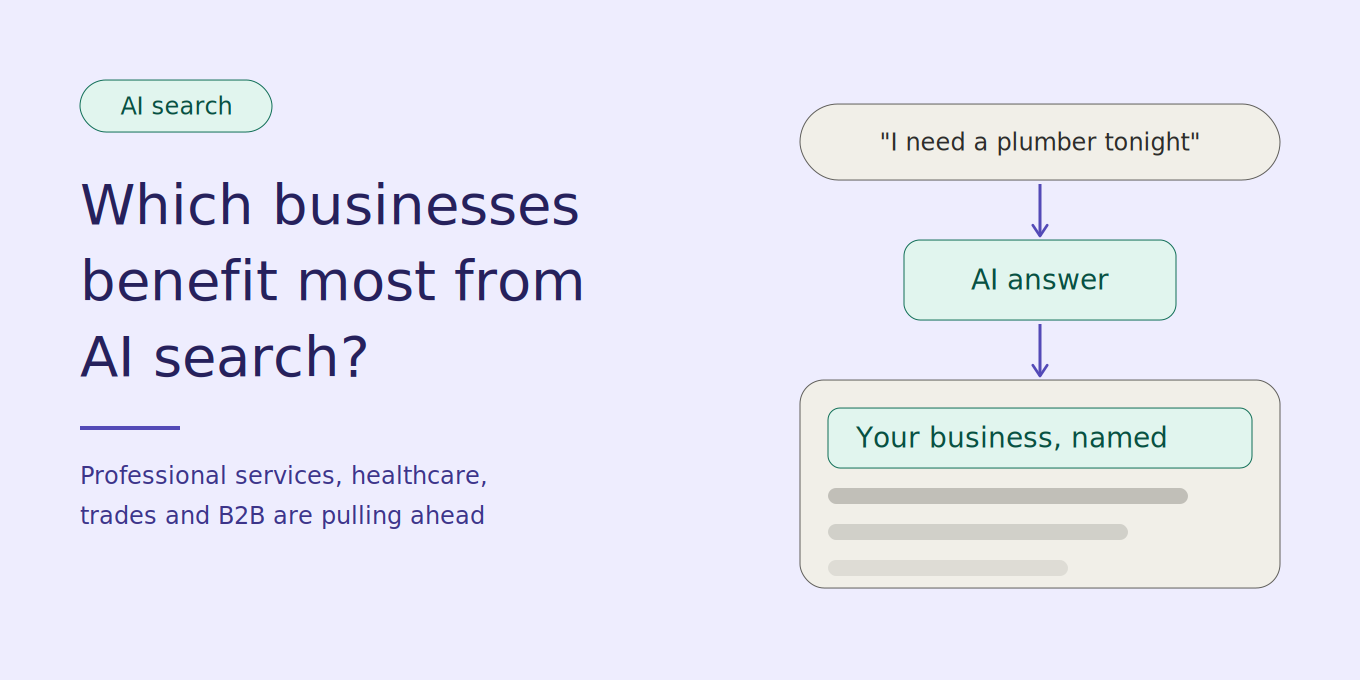
This is especially relevant to the industries discussed in our article Which Businesses Will Benefit Most from AI Search?.
Businesses providing specialist services often have an opportunity to distinguish themselves through detailed explanations, verified capabilities and genuine case studies.
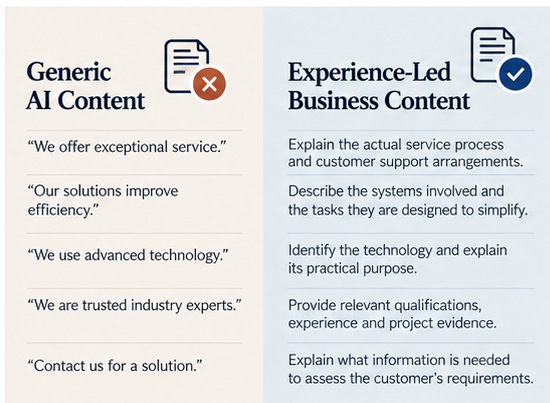
Generic content versus experience-led content
Generic AI content
Experience-led business content
“We offer exceptional service.”
Explain the actual service process and customer support arrangements.
“Our solutions improve efficiency.”
Describe the systems involved and the tasks they are designed to simplify.
“We use advanced technology.”
Identify the technology and explain its practical purpose.
“We are trusted industry experts.”
Provide relevant qualifications, experience and project evidence.
“Contact us for a solution.”
Explain what information is needed to assess the customer's requirements.
The second approach gives readers something useful.
It also provides more specific information that search and AI systems may be able to interpret.
A Real B2B Websites Example: Lotsa Lanyards
At B2B Websites, we've seen why content quality and technical website development need to be considered together.
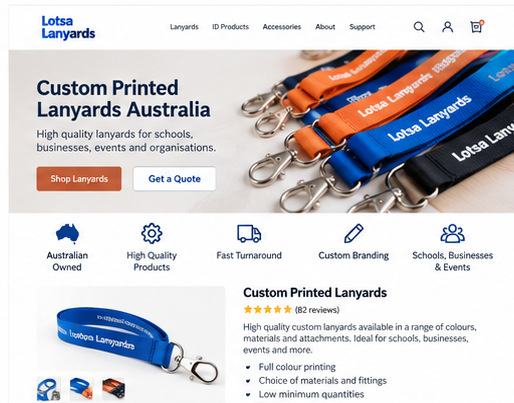
One example is our work with Lotsa Lanyards, involving a WordPress website rebuild and schema optimisation.
A website rebuild is an opportunity to improve how information is organised, presented and maintained.
Schema optimisation involves implementing structured data that helps compatible search systems interpret particular types of webpage information.
For a product-based business, accurate information may include product names, descriptions, specifications, pricing and availability, where applicable.
Consider a business using AI to write descriptions for its products.
AI might produce an attractive paragraph about quality, convenience and value.
But customers may actually need answers to much more specific questions:
- What exactly is the product?
- What customisation options are available?
- Which specifications apply?
- What information is needed before ordering?
- Which claims can the business verify?
AI can help communicate those answers.
It shouldn't invent them.
Why the technical implementation matters
A useful website needs more than readable descriptions.
Information should also be organised logically, connected through relevant internal links and supported by appropriate technical implementation.
Google's structured data documentation explains how standardised markup can provide explicit information about webpage content.
For ecommerce websites, its product structured data guidance describes supported product information and eligibility requirements.
Structured data doesn't guarantee better rankings or AI recommendations.
However, correctly implemented markup can help supported search features interpret eligible information.
The lesson from Lotsa Lanyards is that a website's visible content and its machine-readable information should tell the same accurate story.
This is also why choosing a website platform is only part of the decision.
In our comparison, Is Webflow Better Suited for AI Overviews Than WordPress or Shopify?, we examine how technical implementation differs between popular website platforms.
The right outcome depends on how effectively the platform is configured and maintained — not simply its brand name.
Case study note: The confirmed Lotsa Lanyards project scope includes a WordPress rebuild and schema optimisation. No unverified traffic, ranking or revenue improvements are claimed here.
What Makes Website Content Trustworthy?
Google's guidance encourages publishers to consider experience, expertise, authoritativeness and trustworthiness, commonly referred to as E-E-A-T.
These are useful concepts for business owners, although they should not be mistaken for four separate numerical ranking scores.
Experience means demonstrating relevant first-hand knowledge.
Expertise means understanding the subject appropriately.
Authoritativeness concerns credibility and recognition relevant to the topic.
Trustworthiness concerns accuracy, reliability and honesty.
Google provides further explanation in its helpful, reliable, people-first content guidance.
For Australian businesses, applying these principles can be straightforward.
A transport operator can explain real operating requirements.
A manufacturer can publish verified product specifications and production capabilities.
An accounting practice can provide professionally reviewed information about its services.
A website developer can describe actual technical decisions, implementation processes and completed projects.
The common factor is genuine knowledge.
AI can help organise that knowledge, but the business must provide and verify it.
How AI Search Changes the Value of Website Content
Traditional search has generally involved a person entering a query, reviewing results and visiting websites.
AI-powered search can provide a more direct answer, sometimes combining information from several sources.
That doesn't eliminate the need for websites.
Instead, it creates another reason for businesses to maintain clear, accessible and trustworthy information.
We examined this shift in How Will Google's AI Overviews Impact Your Australian Business?.
For a business owner, the commercial question becomes:
Can a customer — or an AI-assisted research tool — accurately understand what our business does and why we're relevant?
If your website contains vague claims, inconsistent information or outdated service descriptions, the answer may be unclear.
If it provides specific, accurate information supported by genuine experience, it becomes a more useful resource.
In May 2026, Google published additional guidance on optimising websites for generative AI features.
Its announcement highlighted valuable, unique content and the continuing importance of established SEO practices.
Read Google's announcement on generative AI search optimisation.
The message for Australian SMEs is that technical SEO and valuable content should work together.
Neither should be treated as a shortcut to guaranteed AI recommendations.
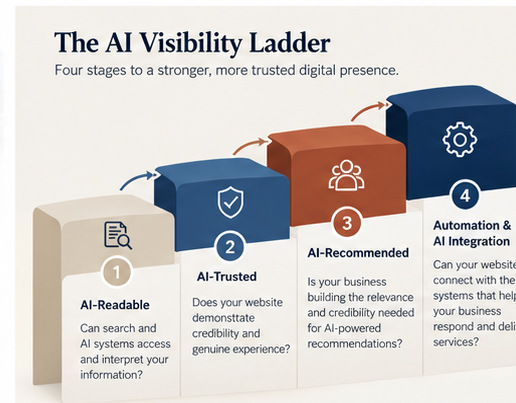
The B2B Websites AI Visibility Ladder
At B2B Websites, we use our AI Visibility Ladder to explain four stages of developing an AI-ready digital presence.
Stage 1 — AI-Readable
Can relevant search and AI-powered discovery systems access and interpret your website's important information?
This includes crawlability, page structure, clear service descriptions and appropriate technical foundations.
Stage 2 — AI-Trusted
Does your website demonstrate credibility through accurate information, genuine experience, useful explanations and consistent business details?
This is where content quality becomes particularly important.
Stage 3 — AI-Recommended
Is your business building the relevance and credibility needed to become a suitable candidate for AI-assisted recommendations?
This stage involves strengthening discoverability and trust rather than promising inclusion in AI-generated answers.
Stage 4 — Automation & AI Integration
Can your website connect with the systems that help your business respond to customers and deliver services?
Examples include CRM integration, customer portals, quoting systems and AI-assisted workflows.
The stages work together.
A technically accessible website containing poor information isn't enough.
Neither is an excellent article hidden behind technical problems.
For a deeper discussion, read Is AI-Readiness Really One Thing, or Is Your Website Operating at Different Levels?.
Seven Checks Before Publishing AI-Generated Website Content
Businesses can use AI effectively without sacrificing credibility.
The following checklist provides a practical publishing process.
1. Start with real customer questions
Use enquiries, sales conversations and support requests to identify information customers actually need.
2. Add first-hand business knowledge
Interview experienced employees and include verified examples that demonstrate how the business operates.
3. Verify factual claims
Check statistics, technical specifications, legal information, prices and statements about products or services.
4. Remove generic promotional language
Replace vague expressions such as “industry-leading solutions” with specific, supportable explanations.
5. Review existing website content
Avoid publishing new pages that merely repeat information already available elsewhere on your website.
Improve or consolidate existing pages when appropriate.
6. Check technical accessibility
Review important internal links, indexing, page structure and relevant structured data.
Ensure markup accurately reflects the information visible to visitors.
7. Measure commercial outcomes
Track qualified enquiries, conversions and customer engagement rather than treating the number of published pages as a success metric.
The objective is not simply more content.
It's more useful content that helps the right customers make informed decisions.
Why Internal Links Matter for AI-Ready Content
A useful article shouldn't exist in isolation.
Relevant internal links help visitors discover related information and allow search engines to find connected pages.
For example, an article explaining AI-generated content can naturally link to discussions about AI search behaviour, technical website platforms and business credibility.
This creates a connected library of information rather than a collection of unrelated blog posts.
Internal links should be descriptive and genuinely relevant.
They shouldn't be inserted simply to increase the number of links on a page.
For B2B Websites, the aim is to build a growing resource that helps Australian business owners understand the relationship between websites, AI visibility and business outcomes.
Frequently Asked Questions
1. Does Google penalise AI-generated website content?
Not automatically. Google's policies focus on content quality and misuse, including scaled content abuse. AI-assisted content can be appropriate when it provides genuine value.
2. Can AI-generated content rank in Google?
Yes. However, AI assistance doesn't guarantee indexing, rankings or website traffic.
3. How can businesses make AI content more trustworthy?
Include original knowledge, verify claims, demonstrate relevant expertise and ensure each page answers a genuine customer question.
4. Does structured data improve AI visibility?
Structured data can help supported search systems interpret eligible information. It doesn't guarantee AI citations, rankings or recommendations.
5. Should businesses publish hundreds of AI-generated pages?
Only where those pages address distinct, genuine customer needs and provide meaningful value. Repetitive pages created mainly to target keyword variations are unlikely to be a sound long-term strategy.
6. Is WordPress suitable for an AI-ready website?
Yes. WordPress can support strong technical SEO, structured data and high-quality content when appropriately configured and maintained.
7. Do internal links help search engines understand website content?
Relevant internal links help search engines discover pages and understand relationships between information. They also improve navigation for visitors.
8. How should businesses measure AI content success?
Measure qualified enquiries, conversions, useful engagement and relevant visibility. AI-specific attribution may be incomplete, so avoid relying on a single metric.
Your Website Should Demonstrate What Your Business Actually Knows
AI has made content production faster than ever.
But publishing more words doesn't automatically create more trust.
The businesses that benefit most will be those combining AI's efficiency with genuine experience, accurate information and technically sound websites.
Our work with Lotsa Lanyards illustrates an important principle: website quality involves both the information people read and the technical structures that help systems interpret it.
At B2B Websites, we help Australian businesses build AI-ready websites that combine credible content, practical technical foundations and connected business systems.
Your website should do more than describe your business. It should demonstrate why customers can trust it.
Is your website ready for AI-driven search?
Find out whether your website's content, structure and technical foundations are helping customers and AI-powered discovery systems understand your business.








Versatility Across All Platforms


How can i help you today?


