CASE STUDY
Thompsons
A Custom Staff Rostering & Field Operations Platform for Public Transport
Visit WebsiteProject Type:
Industry:
Primary Capabilities Delivered:
- Custom staff rostering system
- Geofenced staff sign-on and sign-off
- Real-time shift tracking
- Automated availability matching
- Mobile-first field operations platform
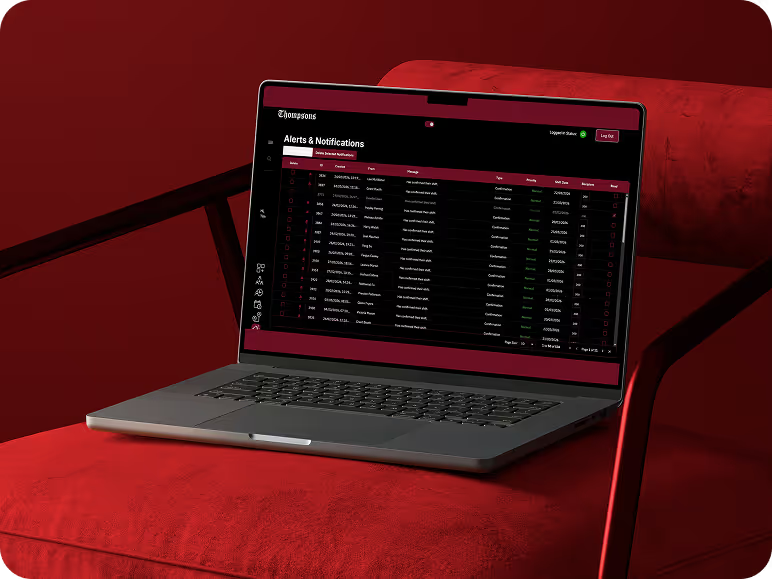
- Notification and internal messaging system
Modules Used:
- Web Software Development
- Data Management & Automation
- Operational Systems Design
- AI-Ready / Logic-First Architecture
Technology Stack
- Frontend: Webflow (Progressive Web App interface)
- Middleware: Wized
- Backend & Logic: Xano
Outcome:
Project Overview
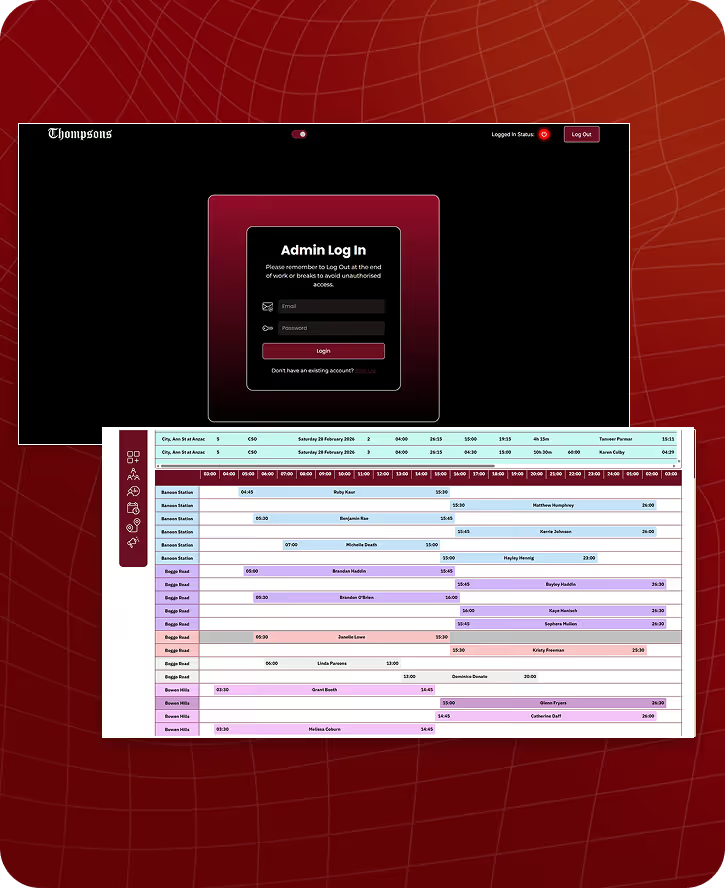
Thompsons Bus Services required a modern digital system to manage their Customer Service Officers (CSOs) who operate across multiple stations in the Brisbane public transport network. The existing processes relied heavily on spreadsheets, manual communication, and fragmented tools. This created challenges around visibility, staff coordination, and accurate shift management. The goal of the project was to build a centralised operational platform that would allow office staff to create rosters, allocate personnel, and communicate with field staff, while allowing CSOs to interact with the system directly from their phones while working.

The platform was designed as a mobile-first Progressive Web App so that staff could easily access it during their shifts without needing to install a traditional application.
While the interface needed to remain simple for operational staff, the system behind it required substantial logic to handle rostering rules, availability matching, location validation, and real-time operational updates.
.avif)
The Core Challenge
- Building a flexible rostering system capable of handling multiple stations and shift structures
- Matching staff availability against operational requirements automatically
- Ensuring staff could only sign on when physically present at their assigned station
- Providing a mobile interface that worked reliably in the field
- Managing real-time communication between staff and office teams
- Preventing scheduling conflicts and enforcing operational rules
- Handling large volumes of shift and staff data without slowing down the system
.png)
Our Approach
The system was designed with a clear separation between user interface, operational logic, and data management.
- Webflow was used to build the Progressive Web App interface that staff interact with during their shifts.
- Wized manages the application state and handles communication between the frontend and backend systems.
- Xano powers the entire operational engine — storing roster data, processing staff availability, enforcing rostering rules, and handling notifications.
This architecture allowed the system to remain flexible and scalable while keeping the user experience straightforward for operational staff.
Rather than relying on spreadsheets or manual allocation, the platform uses structured data and logic to build and manage rosters dynamically.
Solving the Hard Problems
Staff Availability Matching
One of the most important features of the system is the ability to match staff availability against roster requirements.
Office staff can select stations and shift requirements, and the system automatically searches for suitable staff based on availability, role, and operational rules.
This significantly reduces the time required to build rosters while ensuring that suitable staff are always assigned.
Geofenced Sign-On System
To ensure accountability and operational accuracy, the platform includes a geofenced sign-on system.
Staff can only sign on to their shift when they are physically within the defined radius of their assigned station.
This ensures that staff are present at the correct location before beginning their shift and prevents accidental or incorrect sign-ons.
Mobile-First Field Operations
Because CSOs operate in the field, the system was designed primarily for mobile use. The interface focuses on:
- quick sign-on and sign-off
- break tracking
- shift information visibility
- notifications from the operations team
The platform behaves like a native mobile application while remaining web-based, allowing updates and improvements to be deployed instantly.
Rostering Logic & Conflict Prevention
The system enforces several operational rules automatically, including:
- minimum time gaps between shifts
- role requirements for specific locations
- station-specific staffing levels
- availability restrictions for individual staff members
These checks prevent scheduling conflicts and ensure the roster remains operationally valid.
The Outcome
The final system delivered a fully operational staff management platform that:
- Allows office staff to create and manage rosters efficiently
- Automatically matches available staff to required shifts
- Provides CSOs with a simple mobile interface for shift management
- Ensures staff sign on at the correct station location
- Enables real-time communication between field and office teams
- Maintains accurate operational records for every shift
- Since deployment, the platform has become a core operational tool used daily by Thompsons Bus Services staff.
The system continues to evolve as operational needs grow, demonstrating the flexibility of the underlying architecture.
Why This Project Matters
The Thompsons Bus Services platform demonstrates how custom software can transform operational processes within organisations that rely on distributed field staff. Rather than adapting generic tools, the system was designed specifically around the client’s operational requirements. This approach allowed the platform to deliver:
- greater visibility of staffing operations
- reduced administrative overhead
- improved accountability for shift management
- clear communication between field and office teams
For b2b, projects like this reinforce a consistent philosophy:
build systems around real-world operations, not theoretical workflows.
Whether it’s a staff rostering system, a data-driven platform, or a custom internal tool, the same principles apply — clean architecture, reliable data, and software designed to support real work.

Let’s Build It Properly


How can i help you today?


Get in Touch


