CASE STUDY
Raceday Legend
A Custom Data-Driven Tipping Platform for Australian Horse Racing
Visit WebsiteProject Type:
Industry:
Primary Capabilities Delivered:
- Custom Web Software
- Automated Result Matching
- Data Integrity & Deduplication
- Complex Data Processing
- User Performance Tracking
Modules Used:
- Web Software Development
- Data Management & Automation
- Systems & Integrations
- AI-Ready / Logic-First Architecture
Technology Stack
- Frontend: Webflow
- Middleware: Wized
- Backend & Logic: Xano
Outcome:
Project Overview
Raceday Legend was built as a fully custom web application for an Australian horse racing enthusiast. The platform allows users to submit race tips ahead of time, automatically match those tips against official race results, and track performance across multiple races and meetings.
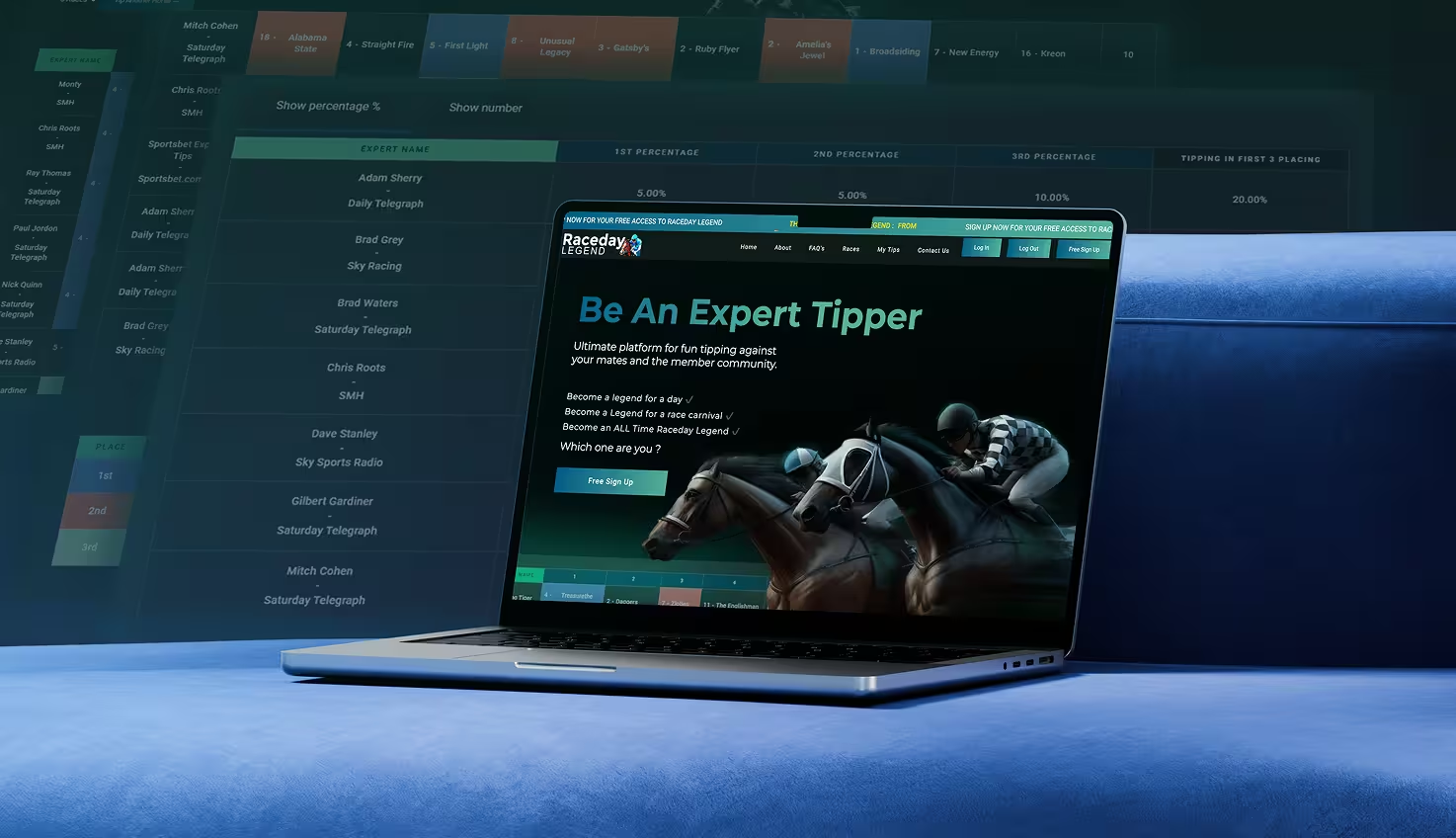
This was not a marketing website or a simple managed database-driven project. It required absolute accuracy, complex business logic, and robust data handling. In a tipping environment, being “nearly right” isn’t acceptable — results must be correct, repeatable, and trusted.
The system was designed from day one as a logic-first platform, where data integrity and automation were more important than visual polish. The frontend was kept intentionally clean and usable, while the backend handled the heavy lifting.
.avif)
.gif)
The Core Challenge
- races can be scratched, postponed, renamed, or abandoned
- runners can be withdrawn at the last minute
- results can arrive late, incomplete, or revised
- multiple data feeds may return overlapping or conflicting records
- Correctly matching user tips to the correct race results
- Handling scratched runners without unfairly penalising users
- Preventing duplicate race and result records
- Allowing results to be safely reprocessed if data changed
- Managing timestamps across systems and time zones
- Updating user totals (1st, 2nd, 3rd placings) accurately and consistently
Our Approach
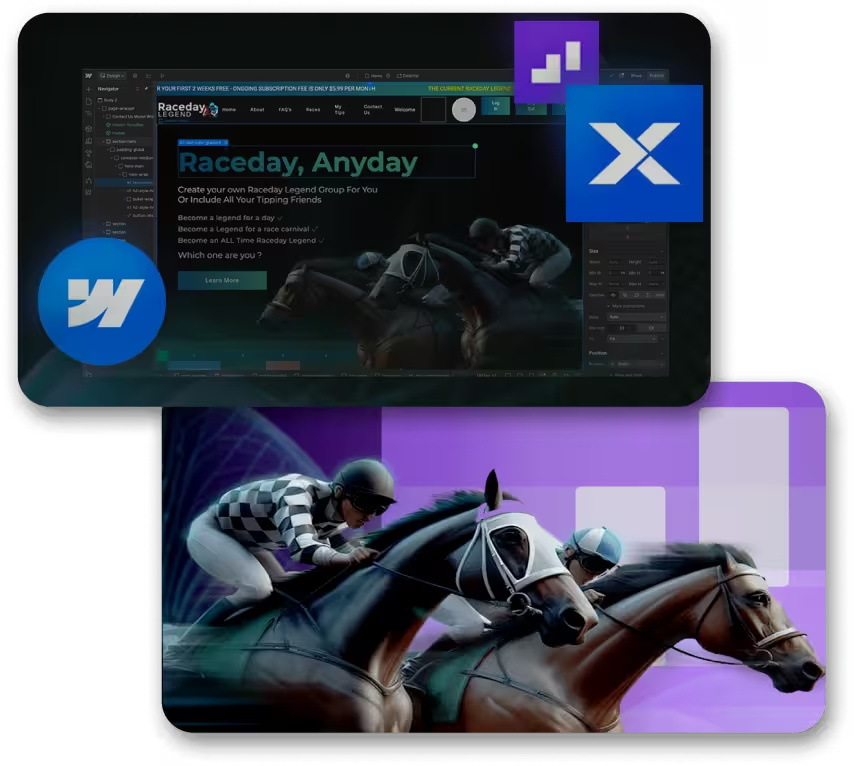
Rather than forcing everything into a single tool, the platform was designed using clear separation of responsibilities:
- Webflow handled layout, responsiveness, and user experience
- Wized managed user interactions, state, and API communication
- Xano acted as the system engine — storing data, enforcing rules, and running all business logic
From the start, b2b focused on predictable structure. Every race, tip, and result needed a stable identity. Instead of relying on race names (which can change or be duplicated), b2b matched records using reliable identifiers such as race location and race number.
The system was also designed so that results could be processed more than once safely. If data needed to be corrected or re-run, the platform would not double-count, corrupt records, or produce inconsistent totals.
.gif)
Solving the Hard Problems
Data Deduplication & Integrity
Race feeds can return the same race or result multiple times, sometimes with slight differences. To handle this, b2b’s software solutions experts implemented strict database-level rules that ensured only the most recent and valid record was kept.
This removed guesswork and prevented subtle data corruption over time.
Handling Scratched Runners
Scratched runners are common in horse racing and can invalidate naive systems. b2b built logic to gracefully handle scratches so that:
- tips were not unfairly marked as incorrect
- historical accuracy was preserved
- recalculations didn’t break past results
Time & Date Normalisation
Race data arrived in mixed timestamp formats — some in seconds, some in milliseconds — across multiple systems. Timestamps were standardised early in the project to ensure:
- correct race sequencing
- accurate result matching
- no timezone-related edge cases
This avoided a class of bugs that often only appear months after launch.
Edge Case Testing
Throughout development, actively tested real-world failure scenarios were required to determine:
- What if results arrive late?
- What if a race is abandoned?
- What if results are updated after initial processing?
- What if a user tipped but the race details changed?
These are not edge cases in racing — they’re normal conditions. The platform was built to handle them predictably.
The Outcome
The final system delivered a fully automated tipping platform that:
- Allowed users to submit race tips quickly and easily
- Automatically matched tips to official race results
- Correctly handled scratches, late changes, and updates
- Correctly handled scratches, late changes, and updates
- Calculated user totals accurately and consistently
Most importantly, it required no manual correction. Once live, the system ran reliably under real-world conditions — the true test of any data-driven application.
Why This Project Matters
Raceday Legend is a strong example of how b2b’s software architects approach custom builds:
- A pragmatic approach that balances efficiency and quality
- Systems that are designed to handle real-world complexity
- A strong focus on data integrity and long-term reliability
- Platforms built to keep performing long after launch
For clients, this translates into:
- fewer surprises
- lower maintenance overhead
- systems that remain usable as requirements evolve
Whether it’s a tipping platform, a staff rostering system, or a custom internal tool, the principles remain the same: clear logic, clean data, and thoughtful architecture.

Let’s Build It Properly


How can i help you today?


Get in Touch


